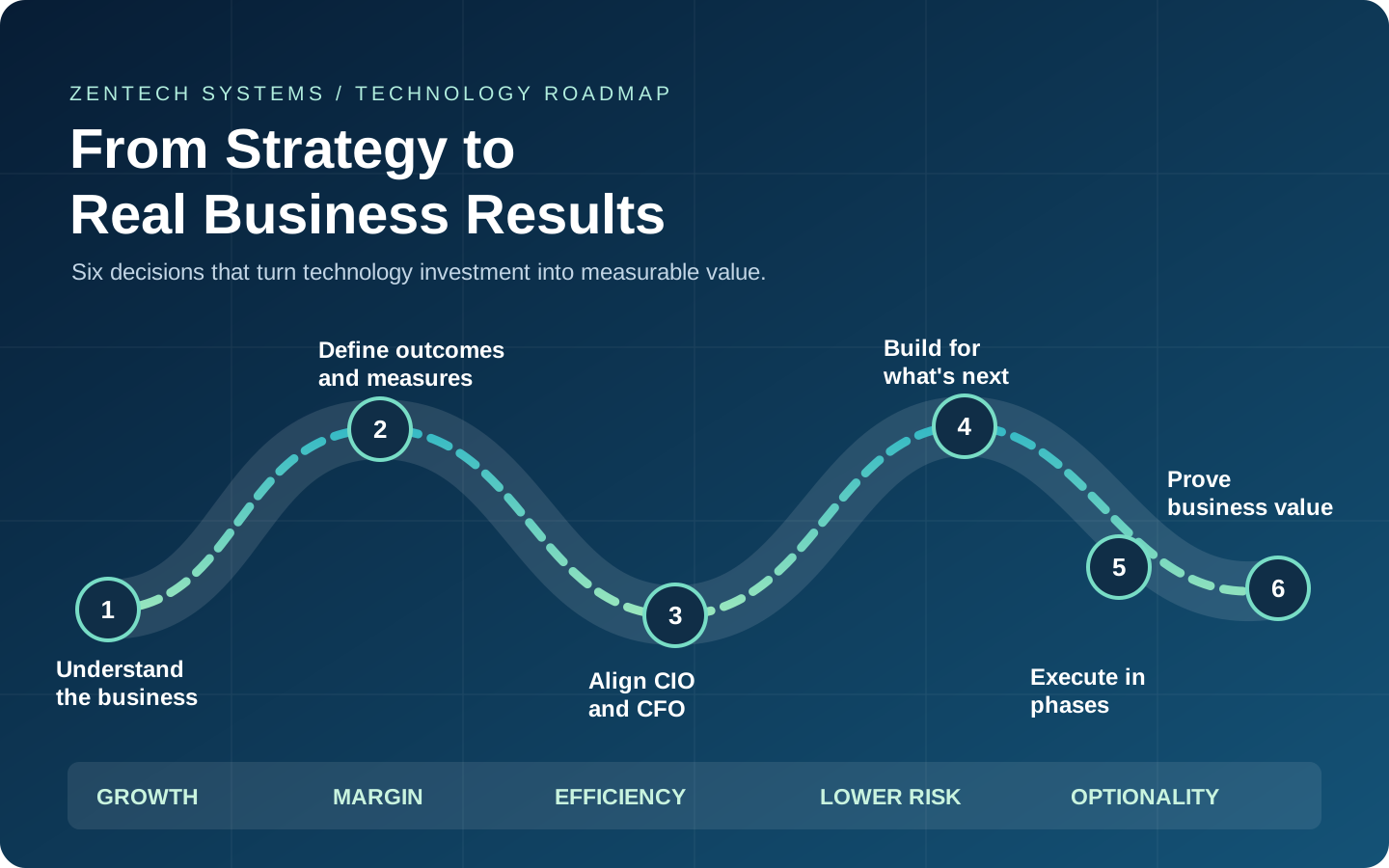
After more than 25 years leading technology, e-commerce, and business operations, I've learned that the best roadmaps aren't built around technology. They're built around business outcomes.
The difference between implementing technology and creating value
One of the experiences that shaped my thinking was helping build SlimFast's direct-to-consumer business. When we started, annual e-commerce revenue was approximately $2 million. By 2021, it had grown to more than $40 million.
That kind of growth doesn't happen because you launch a new website. It requires the customer experience, digital marketing, commerce technology, data, fulfillment, and the processes behind every order to work together.
The objective was never simply to implement more systems. It was to build a business that could acquire customers, fulfill orders, support growth, and operate efficiently as volume increased. A platform isn't the result. The result is what the business can accomplish because of it.
Start by understanding the problem
Technology discussions often begin with a proposed solution: “We need a new ERP.” “We should replace our CRM.” “We need an AI strategy.” Maybe. But first I want to know what's happening in the business.
Are employees spending too much time entering orders manually? Is inventory information unreliable? Does finance struggle to close the books? Are sales teams missing opportunities because they don't have a complete view of the customer?
Sometimes the solution is new technology. Other times it's a process that was never standardized, information that isn't trustworthy, or a system the company already owns but isn't using effectively. Replacing a system doesn't automatically fix the problems underneath it.
The CFO and CIO should be having the same conversation
Technology leaders see architecture, integration, security, scalability, and technical debt. The CFO sees cost, cash flow, margin, risk, and return. A good roadmap connects those perspectives.
If we're automating a process, how much time will we save? If we're consolidating applications, what costs can we eliminate? If we're improving the customer experience, what should happen to conversion, retention, or revenue?
Not every investment produces an immediate financial return. Security, resilience, compliance, and risk reduction matter too. But every major investment should have a clear reason for existing and a way to determine whether it achieved its objective.
Acquisitions taught me to think beyond implementation
Working through private-equity transactions and post-acquisition integration changed how I think about technology. Decisions deferred for years suddenly become urgent: which systems stay, which are consolidated, where critical information lives, and how processes will work across the combined business.
These aren't just IT questions. They affect integration cost, operational risk, and how quickly the organization can realize the value expected from a transaction.
The cost of technology decisions isn't limited to implementation. It includes what those decisions make easier—or harder—to accomplish later. A well-managed environment, with documented systems, clear ownership, and reliable data, gives the business more options.
You have to earn the right to do the next project
Most organizations have more ideas than resources to execute. When everything becomes a priority, execution suffers.
I believe in choosing a manageable number of initiatives, delivering meaningful progress, and using results to inform what comes next. Companies need an 18-to-36-month direction, but investment decisions can be made in shorter increments, often around 90 days, with clear milestones.
What did we deliver? What changed in the business? What did we learn? Does the next investment still make sense? Sometimes the right decision is to stop. The goal is to improve the business, not protect the project plan.
AI makes the fundamentals more important, not less
A company may want an AI assistant that answers questions about contracts, customers, operations, or financial performance. But what happens when documents are outdated, permissions are inconsistent, and nobody agrees on the authoritative source?
AI doesn't make those problems disappear. It often makes them more visible. That's why document architecture, information governance, and reliable data foundations matter.
That doesn't mean waiting until everything is perfect. Choose practical use cases, understand dependencies, put controls in place, and measure results. AI belongs in the business roadmap, not in a separate collection of experiments.
Business ownership matters as much as technical execution
Technology teams can implement systems and build integrations. They can't independently deliver business adoption.
If we're improving order management, operations should own the outcome. If we're changing financial reporting, finance should define success. If we're improving customer acquisition, commercial leadership should own the results.
A small, focused team with clear accountability can often accomplish more than a large program with complicated governance. Deliver something useful, measure the impact, and build on what works.
The result matters more than the technology
When I review a roadmap, I ask: What problem are we solving? What is the expected outcome? Who owns it? What must happen first? When will we evaluate the investment? What if the assumptions change?
At SlimFast, the result was a substantial digital commerce operation. In acquisition and integration environments, the focus was on how technology decisions affected the ability to operate, integrate, and move the business forward.
Technology is an investment in business capability. The roadmap should explain how that investment turns into results.
Before approving another long list of initiatives, ask: If we execute this plan successfully, what will be measurably different about the business?
If we execute this plan successfully, what will be measurably different about the business?
About the author
Steven E. Sarafian is the founder of Zentech Systems and a technology executive with more than 25 years of experience leading technology, digital commerce, and business operations. His leadership experience includes SlimFast, Glanbia, and CellCore Biosciences.